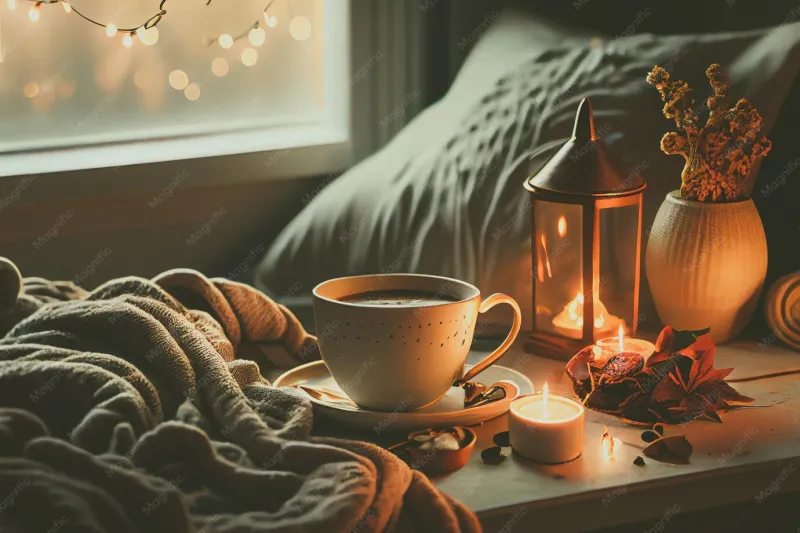
Choosing Rest: How More Americans Are Redesigning Their Homes — and Their Lives — Around Stillness

Photo by Photo by Franco Debartolo on Unsplash on Unsplash
For a long time, busyness was the badge of honor. Packed calendars, side hustles, inbox-zero ambitions — the message was clear: if you weren't grinding, you were falling behind. But somewhere between the pandemic years and the collective burnout that followed, something shifted. People started asking a different question: What if slowing down was actually the point?
This is the quiet heart of the slow living movement — and it's finding its most powerful expression not in productivity apps or morning routines, but in the way people are choosing to design and inhabit their homes.
What Slow Living Actually Means
Slow living isn't about doing everything at a snail's pace or abandoning your ambitions. It's more nuanced than that. At its core, it's a philosophy centered on intentionality — making deliberate choices about how you spend your time, your energy, and yes, your space.
Think of it as the antidote to autopilot. Instead of rushing through your home on the way to the next obligation, slow living invites you to actually be in it. To notice the afternoon light pooling on your kitchen floor. To sit with your coffee instead of gulping it over the sink. To make your surroundings feel meaningful rather than just functional.
Psychologists have a term for the kind of environment that supports this: a restorative space. Research in environmental psychology suggests that certain physical environments — ones that feel safe, comfortable, and personally meaningful — genuinely help the nervous system downshift. In other words, your home isn't just backdrop. It's either working for your wellbeing or quietly working against it.
The Living Room as a Sanctuary, Not a Showroom
One of the most common shifts slow living advocates make is reorienting their living spaces away from performance and toward comfort. For years, home design trends pushed aspirational aesthetics — the perfectly curated Instagram shelf, the minimalist vignette that no one actually sits near. Beautiful, sure. Livable? Not always.
The slow living crowd is pushing back. Softer textures, layered lighting, furniture that invites you to actually sink in — these aren't just design preferences, they're intentional choices that signal to your brain: you can relax here.
Jamie, a teacher from Columbus, Ohio, described the change she made after a particularly exhausting school year. "I basically gutted my living room of everything that felt like it was for other people," she said. "I replaced the stiff loveseat with a big, overstuffed sectional, added a lamp instead of relying on the overhead light, and put a basket of blankets right next to the couch. Now I actually want to come home."
That sentiment — wanting to come home — comes up again and again among people who've made deliberate changes to support a slower pace of life.
Designing for Disconnection
One of the trickiest parts of slow living in the US is the cultural pressure to stay connected. Notifications, news cycles, work emails that don't respect time zones — it's a lot to push against. But many people are finding that small, physical changes in their homes create powerful psychological cues to unplug.
Some swear by a dedicated "no phone zone" — a reading nook, a porch chair, a cozy corner of the bedroom that's explicitly off-limits to screens. Others invest in analog pleasures: a record player in the living room, a puzzle table in a spare corner, a window seat stocked with actual books. The physical presence of these things is an invitation, and over time, the habit builds itself.
Marcus, a software developer in Austin, Texas, turned a small alcove in his apartment into what he calls his "unplugged corner" — a single armchair, a reading lamp, a small bookshelf, and a candle. "It sounds simple," he admits, "but having a space that literally has no charger, no desk, no screen — it trains your brain. You go there to decompress. That's it."
The Psychology Behind Personalized Comfort
There's real science behind why personalized, comfortable spaces help us mentally reset. When we surround ourselves with objects and environments that feel authentically ours — not trendy, not performative, but genuinely reflective of what we love — it activates a sense of psychological safety. We stop being "on" and start just being.
This is partly why the slow living movement resists the urge to redecorate constantly in pursuit of the latest trend. Instead, it encourages building a home that accumulates meaning over time — the grandmother's quilt on the reading chair, the plants you've nursed through multiple winters, the mug collection that tells the story of places you've been.
These aren't just decorative choices. They're anchors.
Starting Small: You Don't Need to Overhaul Everything
If the idea of redesigning your home around stillness sounds overwhelming, here's the good news: slow living is, by definition, not about dramatic overhauls. It's about small, intentional steps.
Start with one room — or even one corner. Ask yourself: Does this space invite me to rest? If the answer is no, identify one or two changes that might shift that. Maybe it's swapping harsh overhead lighting for a warmer lamp. Maybe it's clearing the coffee table of clutter so it feels like breathing room instead of a landing pad. Maybe it's adding a soft throw blanket to your favorite chair.
The goal isn't perfection. It's intention.
Because at the end of the day, slow living isn't a trend or an aesthetic — it's a quiet act of self-respect. It's the decision that your home should work for you, that rest is not laziness, and that the most radical thing you can do in a culture obsessed with hustle is simply... stop. Settle in. And let your home hold you for a while.
And honestly? That sounds pretty cozy to us.