When Soft Lighting and Throw Blankets Work Against You: Designing a Space That's Cozy and Gets Things Done
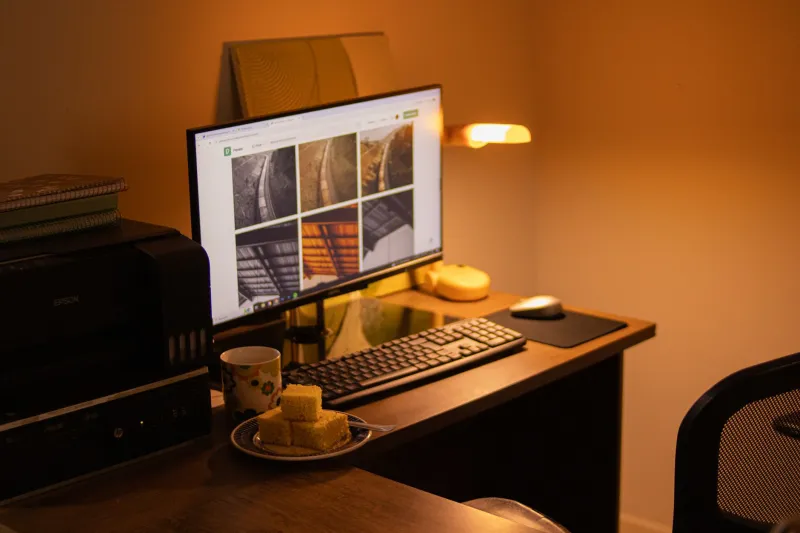
You finally did it. You turned that spare corner of the living room — or maybe an entire spare bedroom — into a space that genuinely feels good to be in. Warm lamp light, a plush chair, maybe a candle that smells like cedar and sandalwood. You sit down to work, open your laptop, and twenty minutes later you're horizontal under a blanket watching something you've already seen twice.
Sound familiar? You're not lazy. You might just be a victim of your own excellent taste in cozy design.
There's a real psychological push-and-pull happening in spaces that are built purely around comfort. And while we are absolutely pro-cozy here at Cozy Cotg, we also think it's worth talking honestly about the moments when softness works against you — and what you can actually do about it.
The Brain-Space Connection Nobody Talks About Enough
Here's the thing about your environment: your brain is always reading it. Before you've consciously decided how you want to feel, your nervous system has already started responding to the light levels, the textures around you, the temperature, even the height of your chair relative to your desk.
Spaces designed for deep relaxation — dim lighting, sink-into-it seating, heavy textiles — send a very clear signal to your brain: stand down. That's exactly what you want at the end of a long day. But when you're trying to draft a proposal, work through a creative project, or just stay mentally engaged for more than fifteen minutes, those same cues can quietly undercut you.
Interior designers who specialize in home offices talk about this a lot. The problem isn't comfort itself — it's comfort without context. When every sensory signal in a room says rest, your brain genuinely struggles to shift into a different gear.
The Dual-Purpose Trap (And Why Good Intentions Aren't Enough)
A lot of us are working with limited square footage. The home office is also the guest room. The creative corner is wedged into the bedroom. The kitchen table doubles as a desk three days a week. When space is tight, we tend to lean hard into making everything feel livable — which makes sense. But it can blur the lines that your brain actually needs.
Productivity researchers have written extensively about what's sometimes called "environmental priming" — the idea that your surroundings cue certain behaviors before you've made any conscious choice. A bed in your line of sight while you're working? That's a cue. A too-soft chair that reclines just a little too easily? Also a cue. Even the presence of a TV on the wall, whether it's on or not, can pull focus.
This doesn't mean your workspace needs to look like a corporate cubicle. It means the design choices you make need to be doing two jobs at once — and that takes a bit more strategy than just making everything soft and warm.
What Actually Works: Layering Comfort Without Losing Function
The goal isn't to strip comfort out of your work or creative spaces. It's to introduce it in ways that support focus rather than dissolve it. A few approaches that interior designers and productivity-focused folks swear by:
Adjust your light by task, not just by mood. Warm, dim lighting is genuinely great for winding down — but it's not great for staying sharp. In a dual-purpose space, consider layered lighting: a warmer ambient source for the room overall, and a brighter, cooler-toned task light specifically at your work surface. The contrast signals to your brain that this spot is for doing, even if the rest of the room feels softer.
Choose seating that supports your body without swallowing it. There's a meaningful difference between a chair that's comfortable because it's ergonomically supportive and one that's comfortable because it's basically a cloud. For work zones, look for something that keeps you upright and slightly engaged — your posture genuinely affects your alertness. Save the oversized reading chair for the corner where you actually want to read.
Use physical transitions as mental ones. If your workspace shares a room with your relaxation space, small physical rituals can help your brain shift modes. Opening a specific window shade before you start working, using a different scent (brighter and more energizing, like citrus or eucalyptus, rather than the warm vanilla you burn at night), or even just rearranging a few items on your desk can act as a mental "on switch."
Add texture thoughtfully, not maximally. Textiles are one of the easiest ways to make a space feel cozy, but in a work zone, less is often more. A single nice throw draped over the back of your chair adds warmth without making the whole setup feel like a lounging destination. The same goes for rugs — a grounding rug under your desk area is great; wall-to-wall plush that makes you feel like you're standing in a cloud is maybe better suited elsewhere.
Keep the visual field clean. Clutter is cognitively draining in a way that cozy softness isn't — they're different problems. In a workspace, visual chaos competes for your attention constantly. A tidy, intentional surface with just a few meaningful objects (a plant, a small lamp, maybe one thing that makes you happy to look at) is both calming and focus-friendly.
The Spaces That Get This Right
Think about the kinds of places where people tend to be surprisingly productive — certain coffee shops, library reading rooms, some hotel desks. What they often have in common is a specific kind of ambient comfort: enough warmth to feel human, enough structure to feel purposeful. They're not cold or clinical, but they're not trying to put you to sleep either.
That's the balance worth chasing at home. Not sterile. Not maximally soft. Somewhere in the middle, where the space feels genuinely good to be in and quietly supports what you're trying to do.
A Note on Knowing Yourself
It's also worth saying: some people genuinely do their best thinking in an extremely cozy environment. If you've tested it and you actually focus better wrapped in a blanket on the softest chair in your house, trust that. Design advice is never one-size-fits-all, and the whole point of building out your home intentionally is to make it work for you specifically.
But if you've noticed a pattern — good intentions, cozy setup, mysteriously low output — it might be worth looking at your space as part of the equation. Not your willpower, not your motivation. Just the room, and what it's quietly telling your brain to do.
Cozy and capable aren't opposites. They just need a little more coordination than most of us give them credit for.