Built for the Long Game Night: How to Design a Living Room Nobody Wants to Leave
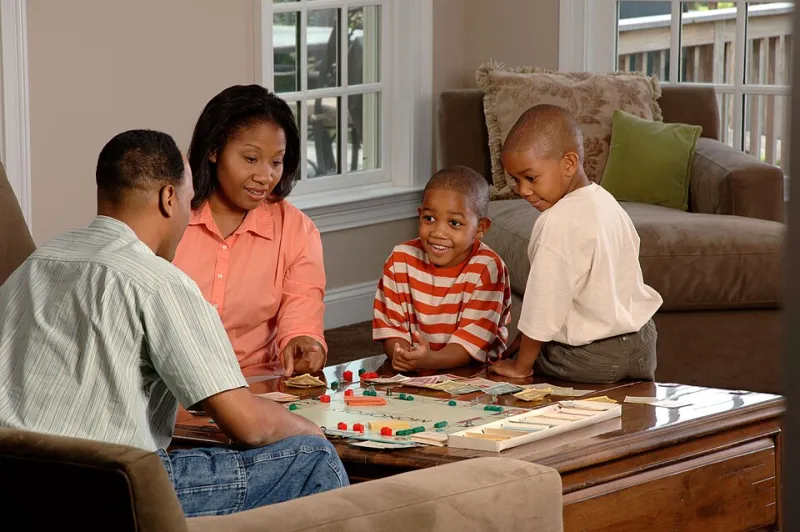
Photo: Bill Branson (Photographer), Public domain, via Wikimedia Commons
There's a specific kind of silence that falls over a living room at 9:47 p.m. when someone finally says, "Well... we should probably head out," and nobody moves. If you've hosted enough, you know it. It's the sound of a room doing its job.
Most of us decorate for the photo. A few of us decorate for the fourth hour of a heated Uno argument, the bowl of chips that keeps getting refilled, and the friend who's now lying on the floor because every seat was claimed by round two. Here's how to join that second group.
Start With the Circle, Not the TV
The default American living room is a couch facing a screen — great for movie night, terrible for connection. Game night works on a different geometry: people need to see each other's faces, the table, and ideally the snacks, without doing neck yoga.
Pull your seating off the walls. Angle a second chair or an ottoman to complete a rough circle around the coffee table. If your room only allows a straight line, add two floor cushions or a storage pouf to break the sightline problem. The goal is a conversation diameter of about eight feet — close enough to hear a whisper about whose turn it is, far enough that nobody's sharing armrests.
Seating for the Overflow Crowd
Rule of thumb: plan seats for six, squeeze fourteen. That means a storage ottoman or two (they double as side tables), a sturdy bench along a wall, and yes, floor pillows. Nobody minds sitting on the floor at a good party — but give them something padded and a place to lean.
Fabric That Forgives
Here's where pretty-but-precious living rooms fail. Velvet looks dreamy and shows every fingerprint. Linen looks editorial and wrinkles like a confession. If this room is going to host humans holding queso, you want:
- Performance fabrics — Sunbrella and similar indoor lines wipe clean and shrug off red wine
- Leather or faux leather — ages beautifully, cleans with a damp rag
- Dark or mid-tone slipcovers — washable is non-negotiable
And a dark, washable area rug underneath it all. A light cream rug at game night is a countdown clock to a stain.
The Snack Corridor
Snack logistics make or break a gathering. The coffee table should be reachable from at least four seats without anyone standing up. Keep a side table or console within arm's reach of the rest. If your layout allows, position the snack zone off to the side of the circle rather than in the middle — a table in the center becomes the game board's natural enemy.
Stock a "game night drawer" nearby: coasters, napkins, a spare bottle opener, a deck of cards. Hosting gets dramatically easier when the supplies live where the party happens.
Lighting for Hour Three
Overhead lights are for cleanup, not company. What flatters a crowd is layered, low, warm light — enough to read cards, soft enough that everyone's tired face looks forgiving.
- Two or three lamps at seated eye level, bulbs at 2700K
- A dimmer on whatever overhead fixture you have (a plug-in dimmer costs about $15)
- One candle or two for the smell-memory factor
Avoid the harsh single ceiling bulb at all costs. It turns a fun night into a deposition.
The Room-by-Room Game Night Checklist
Living room:
- Seating arranged in a circle or U, not a line
- Coffee table clear of decor — it's a work surface now
- Two extra seats in storage (ottomans, poufs, bench)
- Lamps on, overhead off
- Washable throw within reach of the floor-sitters
Dining room/kitchen:
- Snack staging area away from the game zone
- Trash can visible — guests use what they can see
- Drinks station self-serve so you're not bartending all night
Entryway:
- A clear spot for coats and a basket for shoes
- Good lighting so arrivals and goodbyes feel welcoming, not abrupt
Bathroom (yes, really):
- Extra toilet paper visible
- A hand towel that isn't your personal one
The Real Point
A room built for gathering isn't really about furniture. It's a message to your people: stay, settle in, the chips are on the house. Design for the person who arrives at seven and loses track of time until midnight — and your living room stops being a showpiece and starts being the neighborhood's favorite address.