Rooms That Make You Want to Put Your Phone Down (And Actually Mean It)
Let's be honest — willpower alone isn't a great strategy for cutting back on screen time. You can delete apps, set timers, and leave your phone in another room, but if the space you're sitting in doesn't offer anything compelling to replace the scroll, you'll be back at it within ten minutes.
The real trick? Design your home so that putting the phone down feels like the obvious, appealing choice — not the disciplined one.
This isn't about creating austere, tech-free zones that feel punishing. It's about building spaces so comfortable, so inviting, and so rich with sensory experience that your phone genuinely loses the competition. Here's how to do it room by room, corner by corner.
Start With the Why Before You Move the Furniture
Before you rearrange anything, it helps to ask yourself what you actually want to be doing instead of scrolling. Reading? Talking with people you love? Working on a hobby? Napping? Journaling? The answer shapes everything — because a great reading nook looks different from a conversation corner, which looks different from a craft station.
The most effective screen-free spaces are designed around a specific alternative activity. They're not just "no phone zones" — they're yes zones. Yes to the book. Yes to the puzzle. Yes to the long, rambling conversation over a cup of tea. When the alternative is genuinely appealing and physically set up for success, the phone becomes the less interesting option.
The Reading Nook: Your Coziest Escape Hatch
If there's one space that almost universally signals "put the phone down," it's a well-designed reading nook. And you don't need a window seat or a built-in alcove to pull it off — though those are lovely if you have them.
What you do need:
A chair that actually holds you. An oversized armchair with deep cushions, a chaise lounge, or even a floor-level cushion setup with a good back pillow. The key is that it should feel like it's wrapping around you. Perching on the edge of something rigid doesn't invite lingering.
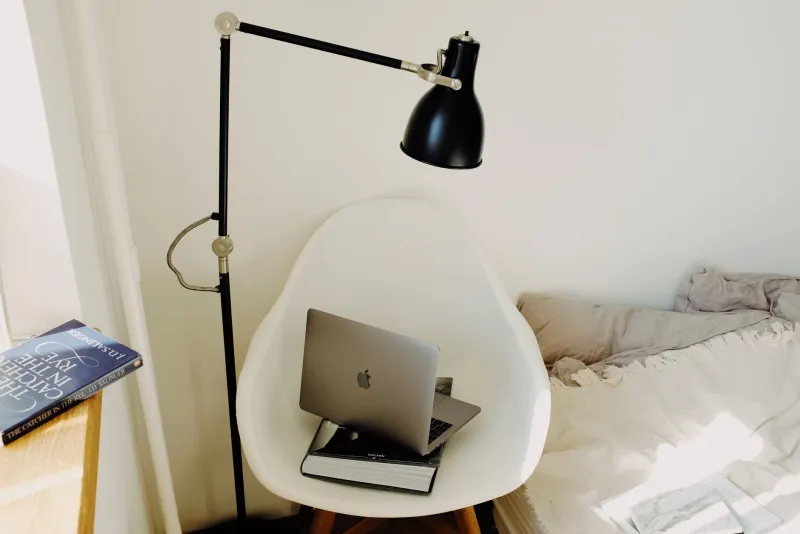
Dedicated, warm lighting. This is non-negotiable. A reading lamp positioned over your shoulder — not overhead — makes a dramatic difference. Warm-toned bulbs (think 2700K) are easier on the eyes and create an atmosphere that feels cozy rather than clinical. A small table lamp or a floor lamp with a swing arm both work beautifully.
A surface within reach. A small side table for your drink, your bookmark, and maybe a candle keeps the experience self-contained. If you have to get up to grab your tea, you'll grab your phone on the way back.
Soft textures. A throw blanket draped over the arm, a soft rug underfoot, a cushion at your back. The more physically comfortable the space is, the harder it is to leave it — and the less you'll feel the itch to reach for your phone.
Conversation Corners: Designing for Connection
One of the quieter casualties of heavy phone use is genuine conversation. We sit in the same room as the people we love and exist in parallel, separate digital worlds. A thoughtfully designed conversation corner can gently nudge everyone back toward each other.
The setup is simpler than it sounds. Two or three comfortable chairs angled toward each other — not toward a TV — create a natural invitation for face-to-face interaction. Add a coffee table or ottoman in the center, a few candles or a diffuser running something warm and grounding, and suddenly you have a space that communicates "let's talk" without a single word.
Lighting matters enormously here. Bright overhead lights tend to feel interrogative; soft, layered lighting from floor lamps and table lamps feels intimate and relaxed. Dimmer switches are genuinely one of the best home investments you can make for this reason.
Consider removing the TV from this corner entirely, or at least positioning seating so it faces away from the screen. When the screen isn't in the natural sightline, it stops being the default.
Hobby Stations: Give Your Hands Something to Do
A lot of phone scrolling happens not because we're genuinely entertained, but because our hands are idle and our brains are looking for mild stimulation. A hobby station addresses both of those things directly.
This could be a small desk in the corner of a bedroom set up for journaling, with a nice pen and a notebook you actually like using. It could be a craft table with your current knitting project or watercolor setup already out and accessible. It could be a puzzle table in the living room with an ongoing project waiting for you.
The key word there is accessible. If your hobby requires you to dig through a closet and set everything up from scratch, the friction is too high and your phone will win. Keep the supplies visible, organized, and ready to go. A little basket with your current project sitting on the coffee table is far more inviting than a bin stored in a cabinet.
Good task lighting — a bright, focused lamp aimed at the work surface — signals that this space is meant for doing something. It's a subtle but effective environmental cue.
Sensory Details That Compete With the Scroll
Beyond furniture and layout, the sensory environment of a space plays a huge role in how compelling it feels. Screens are very good at delivering novelty and stimulation. To compete, your screen-free spaces need to offer something the phone can't: physical, embodied experience.
Scent is one of the most powerful tools here. A candle burning, a diffuser running eucalyptus or cedarwood, or even just a fresh cup of coffee — these things anchor you in your physical environment in a way that a screen simply cannot replicate.
Texture matters too. The weight of a good book in your hands, the softness of a wool blanket, the warmth of a ceramic mug — these are all sensory experiences that feel satisfying in a quiet, grounding way.
Sound is worth considering as well. Soft background music, a small white noise machine, or even just the ambient sounds of your neighborhood through an open window can make a space feel alive and full without adding digital noise.
A Final Thought: Make It Easier to Unplug Than Not To
The goal of all of this isn't to make your home feel like a monastery. It's to lower the barrier to the kind of rest and connection that actually recharges you — and to raise the appeal of the alternatives to scrolling.
When your reading nook is warm and waiting, when your hobby supplies are already out, when the lighting is soft and the room smells like something wonderful, putting the phone down stops feeling like discipline. It starts feeling like the obvious, comfortable, genuinely good choice.
And that's exactly where we like to be here at Cozy Cotg — in the space where comfort and intention meet.