When Your Favorite Room Becomes a Solo Act: How Super-Cozy Spaces Can Quietly Pull You Away from the People You Love
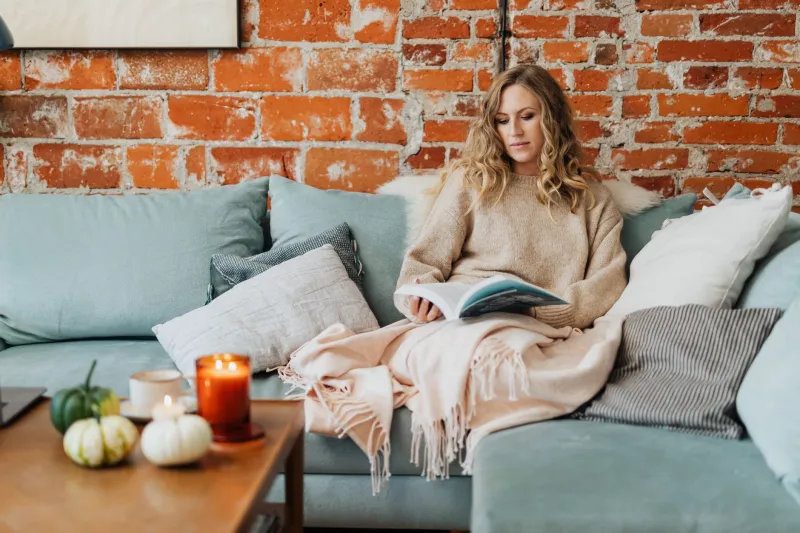
There's nothing quite like sinking into your favorite corner of the house — the one with the perfectly broken-in armchair, the lamp that casts just the right amber glow, the throw blanket that feels like a hug. You've put real thought into that space. And it shows.
But here's a question worth sitting with: When's the last time someone else sat in that room with you?
For a lot of us, the answer is a little uncomfortable. Because somewhere between curating the perfect personal sanctuary and actually living alongside other people, something slips. The cozier our private spaces get, the more we find ourselves retreating into them — and the less we find ourselves showing up in the shared spaces where relationships actually grow.
This isn't a design flaw. It's a very human pattern. But understanding it might be one of the most underrated things you can do for both your home and your relationships.
The Psychology Behind the Pull
Psychologists have long known that humans need a sense of personal territory — a space that feels entirely ours, where we control the temperature, the noise level, the vibe. It's restorative. It's healthy. Up to a point.
The problem creeps in when that restorative space becomes so optimized, so perfectly tuned to your individual preferences, that leaving it starts to feel like a small loss every single time. Your bedroom is quiet and cool and smells like your favorite candle. The living room, by contrast, has your partner's podcast on, your kid's LEGOs on the floor, and a brightness level that's three notches too high for your liking.
The math isn't complicated. Your brain will keep choosing the easier, more comfortable option — and over time, that choice starts to look a lot like withdrawal.
This is what researchers sometimes call "behavioral retreat" — the gradual narrowing of the spaces where we engage with others, often without any conscious intention to pull away. It's not that you don't want to spend time with your family or roommates. It's that your environment has quietly made solitude the path of least resistance.
The Rooms Most Likely to Become Hideouts
Not all cozy spaces carry the same risk. A few tend to be repeat offenders:
The bedroom. For many Americans, the bedroom has evolved from a sleep space into a full-on personal entertainment hub — TV, streaming, snacks, skincare routines, doom-scrolling, the works. When the bedroom becomes your everything room, the rest of the house (and the people in it) gets edited out.
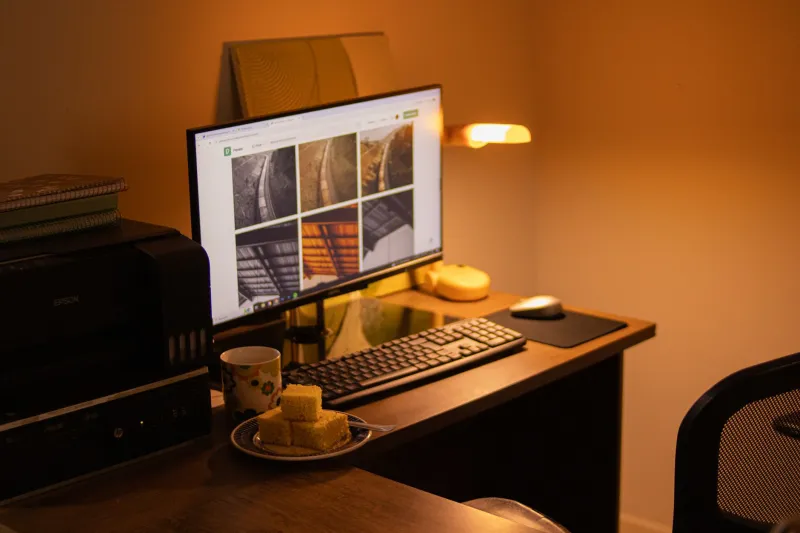
The home office. Remote work blurred a lot of lines, and one of them is the line between "I'm working" and "I just really like it in here." A home office that's warm, personalized, and stocked with everything you need can make re-entering household life feel disruptive — even when the workday is technically over.
The reading nook or hobby corner. These are the sneakiest ones, because they're built around activities that feel inherently solo. There's nothing wrong with having a space to read or craft. But when that nook becomes your default landing spot every evening, it can quietly crowd out the kind of casual togetherness that keeps relationships feeling close.
What Connection Actually Needs From a Space
Here's the thing: shared spaces don't have to sacrifice coziness to encourage connection. In fact, the most relationship-friendly rooms tend to be the ones that feel just as inviting as your private retreat — they just happen to be built for more than one person.
Think about what makes your solo space so appealing. Soft lighting. Comfortable seating. A manageable noise level. Things within reach. Now ask yourself: does your living room or kitchen offer any of that?
For a lot of households, shared spaces are designed for function or aesthetics — but not necessarily for comfort. They look good in photos but they don't feel particularly inviting to settle into for a long stretch. That's a fixable problem.
Practical Ways to Redesign for Both Comfort and Connection
Layer the lighting in shared spaces. Overhead lighting is a connection killer. It's harsh, it's flat, and it signals "task mode" rather than "settle in." Swap in floor lamps, table lamps, and even a string of warm-toned Edison bulbs. The goal is to make your living room feel as soft and enveloping as your bedroom does at night.
Create multiple seating zones. A single sofa facing the TV isn't a space that invites conversation — it's a space that invites passive coexistence. Add a pair of chairs angled toward each other, or a window seat with throw pillows. Give people somewhere to actually face each other.
Bring the sensory details into shared rooms. Scent, texture, and temperature are the holy trinity of coziness, and most of us deploy them almost exclusively in our private spaces. Put a diffuser in the living room. Add a chunky knit throw to the couch. Get a small space heater for the corner where people tend to gather in the evenings. These small upgrades make shared spaces feel worth lingering in.
Give your private retreat a gentle boundary. This one's less about design and more about intention. Consider keeping certain activities — a morning coffee, a pre-dinner chat, a weekend movie — off-limits for your solo sanctuary. Not as a punishment, but as a way of preserving the shared spaces as places where life actually happens with other people.
Design a shared ritual space. Even a small kitchen table with two good chairs and decent lighting can become a place of genuine connection if it's treated that way. The physical space matters, but so does the habit. Pick one spot in your home and commit to using it together — for coffee, for meals, for nothing in particular.
Cozy Doesn't Have to Mean Closed Off
There's a version of cozy that pulls inward — that wraps you up so tightly in your own comfort that the world outside your bedroom door starts to feel like an intrusion. And there's another version that opens outward — that makes a whole home feel like a place worth being in together.
The best homes do both. They give you somewhere to exhale on your own and somewhere to exhale alongside the people you love. Getting there usually isn't about a major renovation. It's about noticing where the comfort is concentrated in your home — and intentionally spreading it around.
Because at the end of the day, the coziest thing about a home isn't the throw blankets or the perfect lighting. It's the feeling that the people in your life actually want to be there with you.