Home Sweet Fortress: When Your Perfect Nest Starts Keeping Everyone Else Out
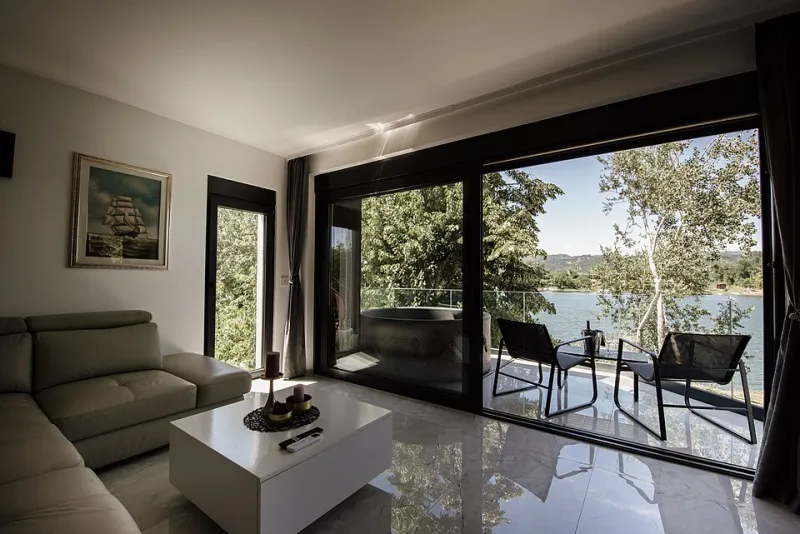
Photo: Shixart1985, CC BY 2.0, via Wikimedia Commons
Somewhere between buying your third set of linen throw pillows and finally nailing the perfect ambient lighting in your living room, something shifted. Your home became exactly what you wanted it to be. And then, quietly, almost without noticing — you stopped wanting anyone else in it.
Sound familiar? You're in good company.
There's a real paradox at the heart of cozy living that doesn't get talked about nearly enough. The more intentional you become about your home environment, the more personal it feels — and the more an unexpected guest or a casual dinner party can start to feel like an intrusion rather than a joy.
Why Super-Cozy Spaces Can Feel Fragile
Interior psychologists have a term for this: sanctuary sensitivity. When you've invested significant time, money, and emotional energy into making your home feel like a true refuge from the outside world, your nervous system starts to associate that space with safety and control. Having other people in it — with their unpredictable energy, their potential to spill wine on your new area rug, their tendency to rearrange throw pillows — can trigger a low-grade anxiety that surprises even the most naturally hospitable people.
It's not that you've become antisocial. It's that your home has become too good at its job.
One reader from Nashville described it perfectly: "I used to love hosting. Then I spent two years making my living room exactly what I'd always dreamed of, and suddenly having people over felt like letting strangers into a museum I curated myself. I started making excuses to meet friends at restaurants instead."
That story is more common than you'd think.
The Design Choices That Accidentally Say 'Do Not Touch'
Here's something worth sitting with: some of the most popular cozy design trends are also, unintentionally, some of the most uninviting for guests.
Delicate textiles that require careful handling. Perfectly arranged bookshelves that look amazing but feel off-limits. Candles placed so precisely that lighting them feels like disturbing a still life. A sofa arrangement so optimized for your solo Netflix routine that there's genuinely no comfortable seat for a second person.
None of these choices are wrong on their own. But layered together, they can create an environment that reads as personal rather than welcoming — even when that's the last thing you intended.
The fix isn't to strip your home of personality. It's to make deliberate room for other people within it.
Designing for Two Kinds of Comfort
The good news is that your comfort and your guests' comfort aren't actually opposites. They just need a little negotiation.
Start with seating flexibility. One of the simplest shifts you can make is ensuring your living room can comfortably seat at least four people without anyone perching awkwardly. This doesn't mean buying more furniture — it often means swapping one oversized piece for two smaller ones, or adding a couple of low-profile floor cushions that tuck away when you don't need them.
Create a 'guest layer.' Think of your home as having two layers: your personal comfort layer (the things you love and have curated for yourself) and a guest layer that activates when people come over. This might be a dedicated shelf of mugs that aren't your favorites but look great, a basket of extra blankets that live in a closet until company arrives, or a side table that gets cleared for drinks when friends visit. The guest layer doesn't have to live out all the time — it just has to exist.
Loosen one thing in every room. Identify the element in each space that feels the most precious to you and ask yourself: could I make a version of this that I'm genuinely okay with people touching? Not everything needs to be guest-proof. But one thing per room being truly accessible goes a long way toward making people feel at ease.
The Hosting Reluctance You Haven't Admitted Yet
Sometimes the issue isn't the design at all — it's what the design is protecting.
For a lot of people, an ultra-cozy home becomes a place where they feel genuinely in control of their environment in a way they don't feel anywhere else. Inviting people in means inviting in variables you can't manage. And when the rest of life feels chaotic or overwhelming, that control can become something you hold onto pretty tightly.
There's nothing wrong with needing your home to feel like a safe space. But it's worth asking yourself occasionally whether the home you've built is serving your social life or quietly replacing it.
A few honest questions to sit with:
- When did you last have someone over who wasn't already in your immediate inner circle?
- Do you feel relieved when plans to host fall through?
- Has your home become the reason you don't go out — and the reason you don't have people in?
If you answered yes to more than one of those, the issue might be less about furniture arrangement and more about what you've started using your home to avoid.
Small Gestures That Make Guests Feel Like They Belong
You don't have to throw a dinner party to practice this. Genuine hospitality lives in small, consistent gestures — and those gestures can be built into your home's design without changing its overall feel.
A small tray near the front door with a candle and a note that says "make yourself at home" sounds cheesy, but it works. A coffee station that's clearly set up for more than one person. A guest bathroom with actual real soap, not just the decorative bar you never touch. These are tiny signals that say: I thought about you before you got here.
Your home can still be your sanctuary. It just doesn't have to be a sanctuary for one.
The coziest homes aren't the ones that look the most perfect — they're the ones that make every person who walks through the door feel like they were expected. Like there's a spot that was always meant for them. That's the version of cozy worth designing toward.