Designed for Silence: How Your Living Room Might Be Accidentally Shutting Down Real Conversation

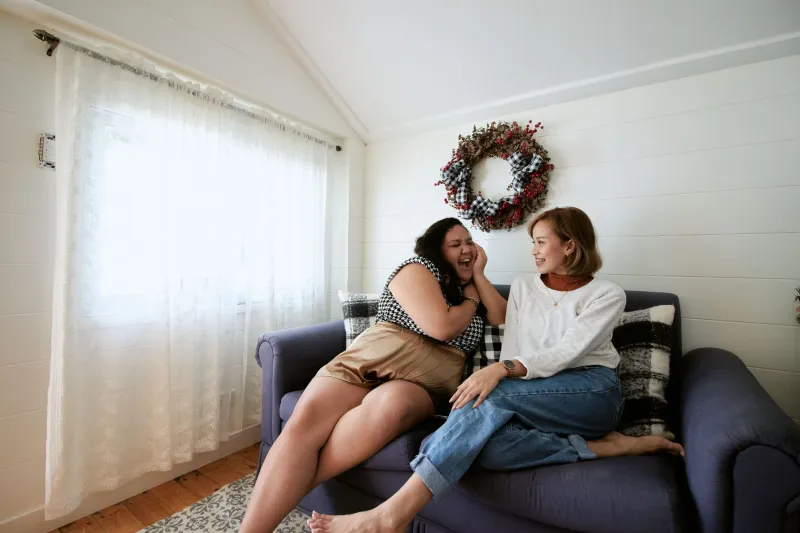
Photo: DFID - UK Department for International Development, CC BY 2.0, via Wikimedia Commons
Imagine a Saturday evening. Your family is all home. Friends have stopped by. The living room is warm, the lighting is soft, everyone has a drink. And yet — somehow — nobody is really talking. Someone's on their phone. Someone else is half-watching whatever's on TV. The conversation keeps starting and stopping, never quite finding its footing.
It's easy to blame the phones. But what if the room itself is part of the problem?
This isn't a fringe idea. Interior designers and family therapists have been saying for years that the physical layout of a space has a profound effect on whether the people inside it actually talk to each other — or just occupy the same air. And the trends that dominate modern home design, particularly the ones associated with comfort and coziness, are quietly working against genuine connection in ways most of us haven't stopped to notice.
The Elephant in the Room (It's Your TV)
Let's start with the most obvious culprit: the television as the organizing principle of the living room.
In most American homes, the furniture is arranged around the TV the way pews face an altar. The sofa faces it. The chairs angle toward it. The coffee table creates a perimeter around it. Every sight line in the room leads to the screen.
This arrangement made more sense when the TV was the primary entertainment option and watching together was a communal activity. But when everyone in the room also has a personal screen in their pocket, the TV-centric layout stops creating community and starts just creating passive proximity.
"The furniture arrangement sends a message about what the room is for," says interior designer Mara Tillson, who specializes in residential spaces in the Pacific Northwest. "When everything points at one focal point and that focal point is a screen, the room is telling you to consume, not to connect."
Furniture Arrangement: The Geometry of Connection
Research on conversation and spatial design consistently shows that people talk more when they're seated facing each other — or at slight angles — at a relatively close distance. The sweet spot tends to be somewhere between four and eight feet apart. Too far, and conversation feels effortful. Too close, and it feels uncomfortable. But the directional relationship matters just as much as the distance.
Side-by-side seating — like two people on a long sofa both facing forward — is actually one of the least conversationally productive arrangements. You can't easily make eye contact, you can't read facial expressions, and there's no natural point of visual focus to anchor a shared exchange.
Yet the standard sofa-plus-loveseat-plus-TV setup puts most people in exactly this position.
Family therapist Dr. Jerome Ault, who practices in suburban Atlanta, has noticed a pattern in his work with families. "I ask people where in their home they have their best conversations, and almost nobody says the living room. They say the kitchen table, or the porch, or the car. Spaces where they're either face-to-face or where there's no screen competing for attention."
The Ambient Trap
Here's a subtler one: ambient elements that are individually pleasant but collectively create a kind of sensory fog that makes real conversation harder.
Background music playing at a volume that's just loud enough to be distracting. A TV on with the sound low — which is somehow more distracting than one that's fully on or fully off, because the movement keeps pulling attention. Lighting so dim that you can't quite read expressions. A room so deeply comfortable that everyone sinks into their own private experience of relaxation rather than engaging outward.
None of these things are bad on their own. But layered together, they create an environment that's optimized for passive enjoyment rather than active exchange.
Tillson calls it "the ambient trap" — designing a room that feels good to be in, but makes it genuinely harder to be present in. "Coziness is wonderful. But there's a version of it that's almost sedating. The room becomes a place you go to decompress alone, even when you're technically with other people."
What Actually Makes a Room Conversational
So what does a room designed for real connection look like? The good news is it doesn't have to look dramatically different from what you already have. It's more about intentional adjustments than a full redesign.
Create at least one face-to-face seating configuration. This doesn't mean eliminating your sofa. It means adding or repositioning a chair or two so that some seats in the room are angled toward each other rather than all pointing the same direction. Even a single armchair pulled to face the sofa changes the conversational dynamics of the whole space.
Give the TV a less dominant position. This is the big one, and it's worth thinking about seriously. Can the TV be mounted or positioned so it's not the first thing your eye goes to when you enter the room? Can the seating be arranged so it serves conversation first and TV-watching second, rather than the reverse? This doesn't mean hiding the TV — it means demoting it from architectural centerpiece to one element among several.
Manage your ambient sound intentionally. Background music is actually good for conversation when it's at the right level — around 50–60 decibels, which is roughly the volume of a normal conversation. It reduces social anxiety and creates a sense of shared environment. What's not good: TV noise at low volume, or music loud enough that people have to raise their voices. Choose deliberately.
Bring in a table. This sounds almost too simple, but a central table — even a modest one — gives people somewhere to put their drinks, their plates, their phones. It creates a shared focal point that isn't a screen. It subtly anchors people to the space and to each other. Dining tables have been facilitating conversation for centuries for a reason.
Consider the lighting. Dim lighting is cozy, but very dim lighting actually reduces social engagement. People are more animated and talkative in spaces where they can see each other's faces clearly. Try layered lighting — warm ambient light plus a brighter option you can switch on when you want the room to feel more alive.
Create a phone landing zone near the entrance. A small tray or charging station near the door of the room gives everyone a natural place to set their phone when they come in. It's not a rule, just an invitation — but it works surprisingly often.
Reclaiming the Room
There's something worth sitting with here: the spaces we've worked hardest to make comfortable are often the ones where we feel most disconnected from the people we share them with. That's not an indictment of cozy design — it's a call to be more intentional about what we're designing for.
A living room that's warm and beautiful and also genuinely brings people together isn't a harder room to create. It just requires thinking about the humans who will use it, not just the aesthetic you want to achieve.
The best rooms aren't the ones that look the most inviting in photos. They're the ones where, somehow, an hour passes and you realize you've been talking the whole time without noticing.