The More Perfect Your Home Looks, the Less People Want to Stay
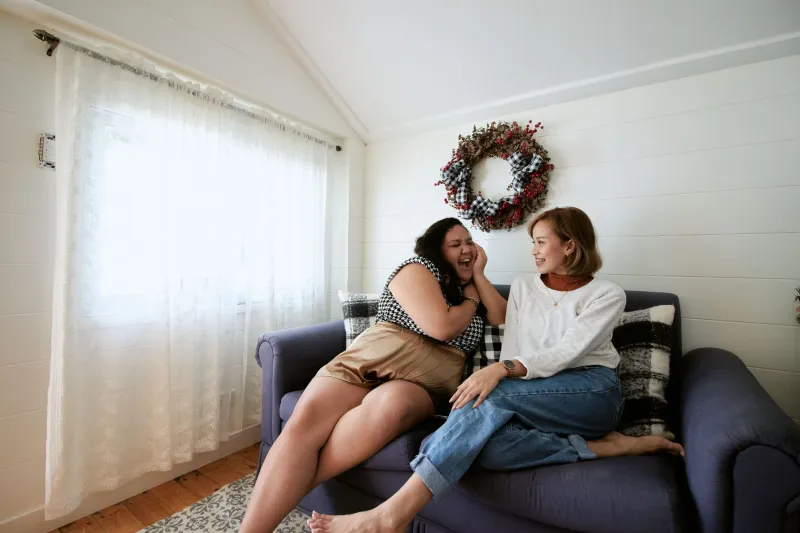
There's a moment a lot of us know pretty well. A friend walks through your front door, takes one look around, and says something like, "Oh wow, it's so nice in here — I feel like I shouldn't even sit down." You laugh it off. But later, you notice they didn't really relax. They perched on the edge of the couch. They kept apologizing for setting their coffee cup down. And they left earlier than you expected.
That's not a coincidence.
Somewhere in the pursuit of the perfectly cozy home — the layered throws, the artfully arranged candles, the pillows that look like they've never been touched — a lot of us have accidentally built spaces that send a very specific message to the people we love: look, but don't linger.
When Aesthetic Becomes a Barrier
There's real psychology behind this. Research in environmental psychology has long suggested that people calibrate their behavior to match the spaces they're in. Walk into a formal dining room with a starched tablecloth and your posture changes. Step into a room with a cluttered coffee table and a half-finished puzzle and your shoulders drop.
When a home looks too done — too composed, too deliberate — guests unconsciously read it as a space where performance is required. They feel like they need to be careful, quiet, and on their best behavior. That's basically the opposite of what makes people want to stick around.
The irony is brutal, right? You spent months (and probably a significant chunk of your paycheck) creating a space that was supposed to feel warm and welcoming. And it does — in photos. In real life, it might be quietly pushing people away.
The Instagram Effect on Your Living Room
Social media hasn't exactly helped. When your home inspiration comes from highly curated feeds, you're essentially training your eye to see spaces as compositions rather than places where actual humans eat, argue, laugh too loud, and fall asleep during movies.
The homes that go viral online tend to have a few things in common: neutral palettes, zero visual noise, perfectly matched everything, and an almost eerie absence of evidence that anyone actually lives there. They're stunning. They're also deeply uninhabitable as social spaces.
When we bring that aesthetic home, we often do it unconsciously. We start viewing mess as failure. We fluff the pillows back into place the second someone stands up. We feel a low-grade anxiety when a guest's jacket ends up on the armchair we carefully styled. And that anxiety? People feel it. Even when you don't say a word.
What Actually Makes People Want to Stay
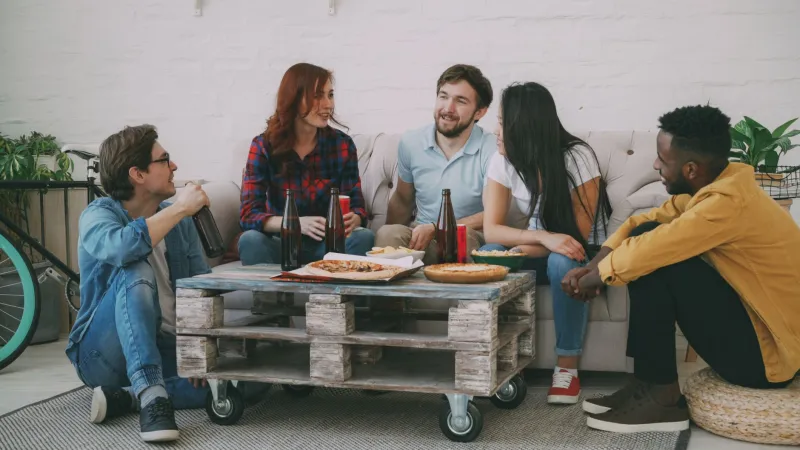
Here's the thing about the homes people genuinely love spending time in — they're usually not the most polished ones. Think about the house you always wanted to end up at after a game, or the friend whose kitchen you somehow always ended up in during a party. What did those spaces have in common?
They had room for you. Room to exist without worrying about ruining something. A stack of books that wasn't arranged by color. A couch that had clearly been napped on. A kitchen table with a little scuff on the corner. These spaces communicated something important: you are more important than the décor.
That's not an argument for letting your home go. It's an argument for designing with people — real, imperfect, snack-eating, accidentally-spilling people — at the center of your decisions.
Small Shifts That Open a Space Back Up
The good news is that you don't have to blow up your whole aesthetic to make your home feel more genuinely inviting. A few intentional tweaks can change the entire social energy of a room.
Leave a little room for imperfection. A bowl of fruit that's slightly overfull, a throw blanket that's casually draped rather than folded like origami, a stack of magazines that isn't perfectly aligned — these small signals tell guests that the space is lived in and that they can live in it too.
Make seating feel like an invitation, not a museum installation. Chairs and sofas should face each other in ways that make conversation easy. If your furniture arrangement looks great in a wide-angle photo but makes eye contact awkward, it's working against you.
Put something communal within reach. A board game on the coffee table. A snack bowl that isn't decorative. A blanket basket that's actually accessible. These aren't just practical — they signal that the room is designed for doing things together, not just looking nice.
Dial down the precious factor. If you're using pieces you'd be genuinely upset about if they got bumped or spilled on, consider moving them out of high-traffic social spaces. The emotional cost of protecting your stuff creates an invisible tension that guests can feel even when nothing actually happens.
The Difference Between Cozy and Controlled
Real coziness — the kind that makes people text you on a Friday night asking if they can come over — is fundamentally about ease. It's about a space that absorbs people rather than displaying them. It's warm in the way a well-worn flannel shirt is warm, not in the way a beautifully staged Airbnb is warm.
There's a version of home design that's about control: controlling how the space looks, controlling how it photographs, controlling the impression it makes. And there's a version that's about connection: creating an environment where the people you care about can fully exhale.
Those two things aren't always at odds. But when they are, it's worth knowing which one you're actually optimizing for.
Coming Home to What Matters
Your home should be one of the most socially generous spaces in your life. A place where people feel like they can kick off their shoes, refill their own glass, and stay an hour longer than they planned because leaving just doesn't feel urgent yet.
That kind of warmth isn't built with the right throw pillow or the perfect accent wall. It's built by designing for the people you want inside your walls — their comfort, their ease, their ability to just be — rather than for the version of your home that looks best from three feet back with good lighting.
The coziest homes aren't the ones that look like no one lives there. They're the ones that look like everyone wants to.