How Smell Quietly Shapes the Way Your Home Feels (And Why Most People Completely Overlook It)

Most of us spend a lot of time thinking about how our homes look. We agonize over paint swatches, obsess over the right throw pillow, and spend entire weekends rearranging furniture until something finally clicks. But there's one sensory layer that rarely makes it onto the design mood board — and it might actually be the most powerful one of all.
Smell.
Not in the obvious "make sure it doesn't stink" way. In the deeper, more intentional sense: the idea that fragrance is a design element as real and as meaningful as light, texture, or color. And once you start thinking about your home that way, it's genuinely hard to stop.
Why Your Brain Treats Smell Differently Than Everything Else
Here's the thing about scent that makes it so uniquely powerful: it bypasses the analytical part of your brain almost entirely. When you see something — a new lamp, a freshly painted wall — your brain processes it consciously. You evaluate it. You decide how you feel about it.
Smell doesn't work that way. Olfactory signals travel directly to the limbic system, the part of the brain that handles emotion and memory, before your rational mind even gets a word in. That's why a single whiff of cinnamon and cloves can suddenly make you feel like it's Thanksgiving at your grandma's house in Ohio, even if you're standing in a Target in July.
This is also why scent creates such a fast, almost subconscious sense of comfort or discomfort in a space. Walk into a home that smells like fresh linen and cedar and your nervous system starts to relax before you've even sat down. Walk into one that smells stale or artificially sweet and something in you braces — even if you can't articulate why.
Designers and hospitality brands have known this for years. Luxury hotels have signature scents piped through their lobbies. Real estate agents bake cookies before open houses. The science is solid: smell shapes how we feel about a space, fast and deep.
The Problem With Most Home Fragrance
So if scent is this powerful, why does it so often go wrong in American homes? Walk down any home goods aisle and you'll find an overwhelming array of plug-in fresheners, synthetic sprays, and heavily scented candles promising everything from "ocean breeze" to "mountain cabin." The problem is that a lot of these products don't create comfort — they create performance.
There's a difference between a home that smells genuinely welcoming and one that smells like it's trying very hard to smell welcoming. Synthetic fragrances can be cloying, one-dimensional, and after a while, oddly fatiguing. They signal effort rather than ease, which is pretty much the opposite of cozy.
More Americans are starting to notice this distinction. There's been a real shift toward cleaner, more natural fragrance options — not just because of wellness concerns around synthetic chemicals, but because natural scents tend to behave differently. They're more complex, they evolve over time, and they feel less like a product and more like an atmosphere.
Building a Scent Palette for Your Home
The best approach to home fragrance borrows a concept from perfumery: layering. Rather than relying on one dominant scent, you build a subtle sensory landscape that shifts slightly from room to room and season to season.
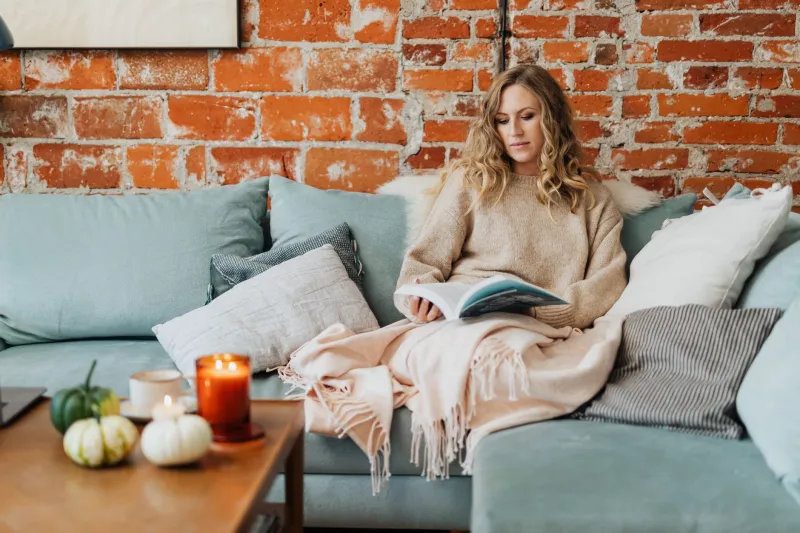
Anchor scents for living areas tend to work best when they're warm and grounding — think sandalwood, amber, beeswax, or aged cedar. Soy or beeswax candles in these notes burn cleaner than paraffin and throw a softer, more nuanced scent. A candle flickering on the coffee table isn't just fragrance; it's atmosphere.
Kitchens and dining spaces are tricky because they already generate their own scent stories. The goal here is usually less about adding fragrance and more about managing it. A small pot of fresh herbs on the windowsill — rosemary, basil, thyme — does double duty: it looks beautiful and releases gentle, clean green notes every time you brush past it. A diffuser with something citrus-forward (bergamot, lemon, sweet orange) keeps things bright without competing with whatever's on the stove.
Bedrooms are where scent can really earn its keep. Lavender's reputation as a sleep aid is well-documented — it genuinely appears to lower heart rate and promote relaxation in multiple studies. But if lavender feels too expected, Roman chamomile, vetiver, or cedarwood are equally calming alternatives. A linen spray on your pillowcase or a reed diffuser on the nightstand keeps the scent subtle enough to feel ambient rather than applied.
Bathrooms benefit from clean, spa-adjacent notes: eucalyptus, peppermint, white tea, green bamboo. These feel fresh rather than perfumed, which suits the function of the space.
Seasonal Scent: Letting Your Home Change With the Year
One of the most underrated ways to make a home feel genuinely alive is to let its fragrance shift with the seasons. This doesn't have to be elaborate — it's more about small, intentional swaps that signal to your senses that time is passing and the home is responding to it.
Spring and summer lean toward lighter, fresher notes: cut grass, white florals, cucumber, sea salt. Fall calls for warmth and depth — spiced apple, clove, smoked wood, dried botanicals. Winter often goes richer still: fir needle, frankincense, warm vanilla, beeswax. These seasonal transitions are deeply tied to how Americans experience comfort at home, and they don't require a full redesign — just a new candle and maybe a bowl of dried citrus peel on the counter.
What If You're Scent-Sensitive?
It's worth saying clearly: not everyone thrives with fragrance, and a home that's genuinely comfortable has to account for that. Some people experience headaches, respiratory irritation, or sensory overload from scented products — and for those folks, forcing fragrance into a space in the name of coziness is completely counterproductive.
The good news is that "scent-free cozy" is absolutely achievable. Clean air itself has a quality — crisp, neutral, open — that reads as peaceful and welcoming. Good ventilation, natural materials that breathe (wool, linen, wood), and houseplants that quietly filter the air can create a sensory environment that feels fresh and grounded without a single candle in sight. The goal was never really about smell specifically; it was always about how a space makes you feel. Scent is just one path to get there.
Starting Small
If you've never thought intentionally about how your home smells, the easiest place to start is your entryway. It's the first thing you — and every guest — encounters when walking through the door. A single soy candle, a small diffuser with a grounding oil blend, or even a bowl of fresh eucalyptus sprigs can shift that first moment of arrival from neutral to genuinely welcoming.
From there, move room by room. Think about the emotional register you want each space to hold — calm, energized, warm, focused — and then ask whether the scent in that room is supporting that or working against it.
It's a small shift in how you think about design. But in terms of how your home actually feels to live in? It might be one of the biggest changes you ever make.