Too Comfortable to Move? What Your Coziest Room Might Be Costing You

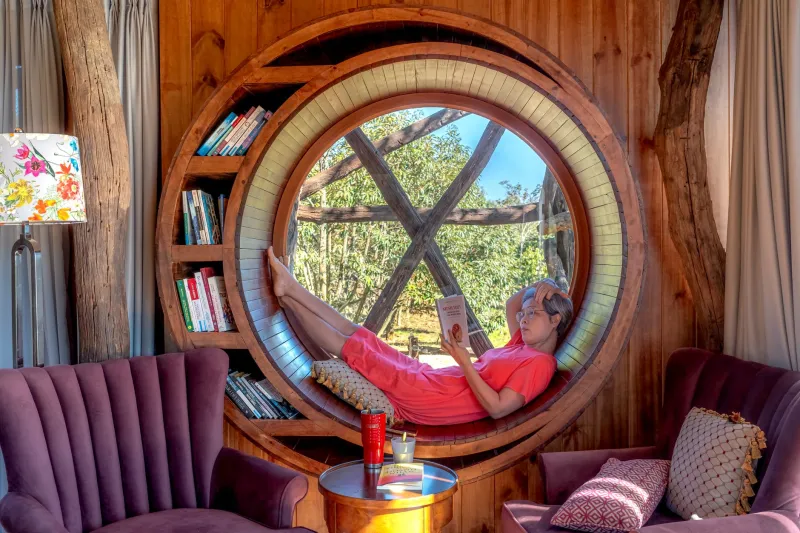
There's that one room. You know the one. The lighting is just right, the blanket situation is borderline professional-grade, and the moment you sink into that chair, the outside world basically ceases to exist. It feels like the whole point of having a home.
But here's a question worth sitting with — pun intended: what if that perfect room is a little too good at its job?
This isn't about guilt-tripping you out of your reading nook. Cozy spaces are genuinely wonderful, and building a home that feels like a sanctuary is something worth celebrating. The tension we're talking about is subtler than that. It's the difference between a room that recharges you and one that quietly becomes a place you retreat to instead of from.
The Psychology Behind the Pull
Interior psychologists — yes, that's a real and growing field — have started paying close attention to how the physical design of a space shapes behavior, not just mood. Dr. Sally Augustin, an environmental psychologist based in the US, has written extensively about how sensory cues in a room can trigger deeply ingrained responses. Warm lighting, enclosed spaces, soft textures, and muffled sound all activate what she describes as a "refuge response" — a primal sense of safety that the nervous system genuinely craves.
The problem isn't the response itself. The problem is when a space is so effective at triggering it that leaving starts to feel like a threat.
"We design rooms to make people feel safe, and that's the goal," says one interior design consultant who works with clients on what she calls "emotionally intelligent spaces." "But safety and stagnation can start to look a lot alike if you're not paying attention."
Readers who've shared their stories with us back this up in surprisingly honest ways. One woman from Portland described spending an entire winter barely leaving her living room — not because she was depressed, exactly, but because the room was just so good that nothing outside it seemed worth the effort. "I'd turned it into this perfect little world," she wrote. "And then I realized I'd stopped calling friends, stopped going to my book club, stopped doing basically anything that required pants."
Comfort as Avoidance — And How to Spot It
The tricky part is that comfort and avoidance feel almost identical in the moment. Both involve being curled up in soft lighting with a warm drink. The difference shows up over time.
A few signs that your cozy room might have tipped into retreat territory:
- You feel a low-grade dread about leaving it, even for things you used to enjoy
- The room has become your default response to any kind of stress, not just the need for rest
- You've started structuring your whole day around getting back to it
- Social plans feel genuinely harder to follow through on than they used to
None of these are catastrophic on their own. But together, they suggest that a space designed for restoration has started doing some of the emotional heavy lifting that connection, movement, and engagement are supposed to handle.
Designing for Both Comfort and Curiosity
Here's the good news: you don't have to sacrifice coziness to fix this. The goal isn't to make your favorite room less wonderful. It's to design your home in a way that also nudges you toward living.
Let other rooms earn their keep. If your living room is doing all the work, think about what the rest of your home is offering. A kitchen that feels inviting enough to actually cook in, a front porch with a chair you'd genuinely use, a workspace with enough warmth that you don't dread sitting down at it — these create reasons to move through your home rather than anchor in one corner of it.
Build in what designers call "prospect" elements. Interior psychology borrows the concept of "prospect and refuge" from evolutionary theory — humans are drawn to spaces that offer both shelter and a view of the wider world. A window seat with a good sightline, a reading chair angled toward the door, a lamp positioned to light a pathway rather than just a corner — these subtle tweaks remind your nervous system that the world outside the cocoon is worth looking at.
Make the threshold easier to cross. One reader from Austin completely rearranged her entryway after realizing that leaving her house felt like a production. She moved her shoes, keys, and bag to a spot she could reach without thinking, added a small mirror and a hook for her coat, and described the result as "removing the friction of leaving." Small change, real difference.
Create a room that's cozy because you've been out in the world. This is maybe the most underrated design principle of all. A space feels most restorative when you have something to restore from. Some people find it helpful to think of their coziest room as a reward rather than a default — something you come home to after being fully present somewhere else.
The Balance Is the Point
Cozy Cotg has always been about making your home feel like the best possible version of itself. That means soft lighting and good blankets and rooms that feel like exhales. But it also means a home that supports your whole life — not just the part of it that happens on the couch.
The most meaningful spaces aren't the ones that make you never want to leave. They're the ones that make coming home feel worth it.
So keep the blanket. Keep the lamp on its lowest, warmest setting. Just maybe also keep the door unlocked.