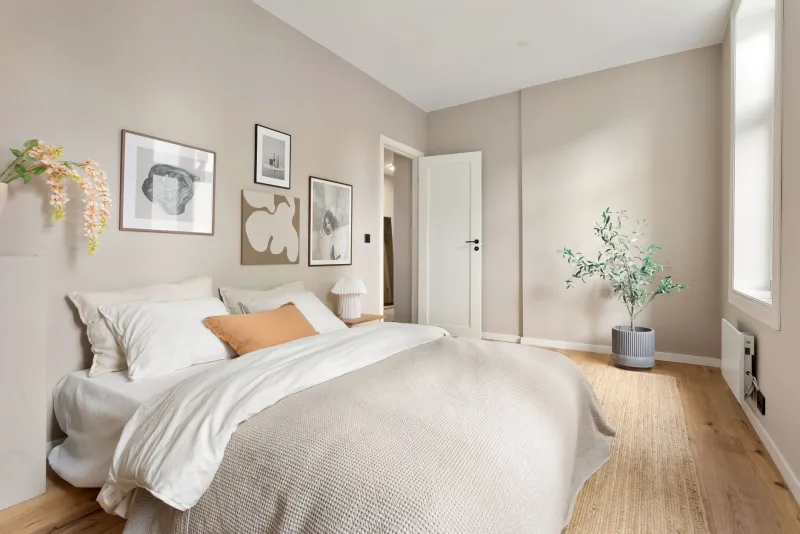
When Your Favorite Room Becomes a Hiding Place: Rethinking Your Home's Comfort Zone

There's that one room. You know the one. Maybe it's a reading nook tucked beside a window, a bedroom that feels like a warm hug the moment you close the door, or a den where the couch has a permanent impression shaped exactly like you. It's your spot — the place you go when the world gets loud, when you're drained, when you just need to be.
There's nothing wrong with having a sanctuary. In fact, building intentional comfort into your home is one of the healthiest things you can do for your mental well-being. But here's a question worth sitting with: when was the last time you left that room feeling genuinely restored — versus when did you leave it feeling like you'd just delayed something you didn't want to face?
There's a thin, blurry line between rest and retreat. And it's worth knowing which side of it you're on.
The Psychology of the Safe Room
Psychologists have long studied the concept of "comfort zones" in behavioral terms, but the physical spaces we inhabit play a surprisingly powerful role in reinforcing those patterns. When we repeatedly associate one room with relief from stress, our brains start to wire that association tighter and tighter. The room becomes a trigger for relaxation — which sounds great, until you realize the flip side: the rest of your home (and by extension, your life) starts to feel comparatively harder to be in.
This is sometimes called environmental conditioning. You've essentially trained yourself to feel okay in one specific place. Over time, the contrast sharpens. The bedroom feels safe; the home office feels like dread. The cozy corner feels like you; the kitchen feels like obligation. Without realizing it, your most comforting room can quietly shrink your world.
It's not a character flaw. It's just how human brains work — and once you understand it, you can start working with it instead of against it.
Signs Your Sanctuary Has Become a Shelter
How do you actually tell the difference between healthy rest and avoidance? A few honest questions can help:
- Do you find yourself in that room not because you want to relax, but because you don't want to deal with something elsewhere?
- Does leaving the room feel like a small act of willpower rather than a natural transition?
- Are there rooms in your home you rarely enter, or that give you a vague sense of unease when you do?
- Has your "cozy time" started to bleed into hours that were supposed to belong to something else?
None of these questions are meant to shame you out of your favorite chair. They're just worth asking honestly. Because the goal of a truly cozy home — the whole vision behind a place where every corner feels like home — isn't one perfect room surrounded by spaces you tolerate. It's a home that works for you in its entirety.
The Launching Pad vs. The Bunker
Here's a reframe that might help: think about the difference between a launching pad and a bunker.
A bunker is where you go when things feel dangerous. It's protective, yes — but it's also reactive. You end up there because something pushed you there. A launching pad, on the other hand, is where you go to prepare. You leave it energized, clearer, ready. The difference isn't always in the room itself — it's in what you're doing there and how you feel when you walk back out.
Your coziest room can absolutely be a launching pad. But it takes a little intentionality to keep it from drifting into bunker territory.
Practical Ways to Expand Comfort Throughout Your Home
The good news: you don't have to sacrifice your sanctuary. You just need to spread a little of its magic around.
Bring the sensory elements with you. What makes your favorite room feel so good? Is it the lighting? A specific blanket? The scent of a candle you only burn in there? Start introducing those same elements into rooms that feel less welcoming. A warm lamp in the home office. A small diffuser in the kitchen. Comfort is often more about sensory cues than square footage.
Create micro-rituals in other spaces. Part of what makes a comfort zone feel safe is familiarity — you know what to expect there. You can build that same sense of ritual elsewhere. A morning coffee routine at the kitchen table. Five minutes of stretching in the hallway. A specific playlist for the bathroom. Ritual creates safety, and safety creates comfort.
Give uncomfortable rooms a single cozy upgrade. You don't need to redesign your home office or overhaul your guest room. Pick one thing — a soft throw draped over the desk chair, a plant on the windowsill, a rug that actually feels good underfoot — and let that single change begin shifting how you feel in that space.
**Practice "intentional migration." ** A few times a week, deliberately choose to do something you'd normally do in your comfort room somewhere else in your home. Read on the porch instead of the bedroom. Eat dinner at the dining table instead of the couch. These small experiments build new associations and quietly expand your sense of ease.
Rest Should Be a Foundation, Not a Fortress
The whole point of creating a cozy home isn't to find one perfect escape hatch from your life — it's to build a life that feels livable, room by room. True rest isn't just about where you collapse at the end of a hard day. It's about cultivating an environment that supports you through all of it: the productive mornings, the messy afternoons, the quiet evenings.
When your comfort isn't concentrated in a single room but woven throughout your home, something shifts. You stop needing to retreat quite so desperately, because you're not fighting your space anymore. The whole house becomes a place you want to be — not just one corner of it.
Your favorite room will always be your favorite. That's okay. But let it be a place you come home to, not a place you hide in. There's a difference — and your whole life can feel cozier once you find it.