When Comfort Becomes a Ceiling: Rethinking the Spaces Where You Feel Too at Home
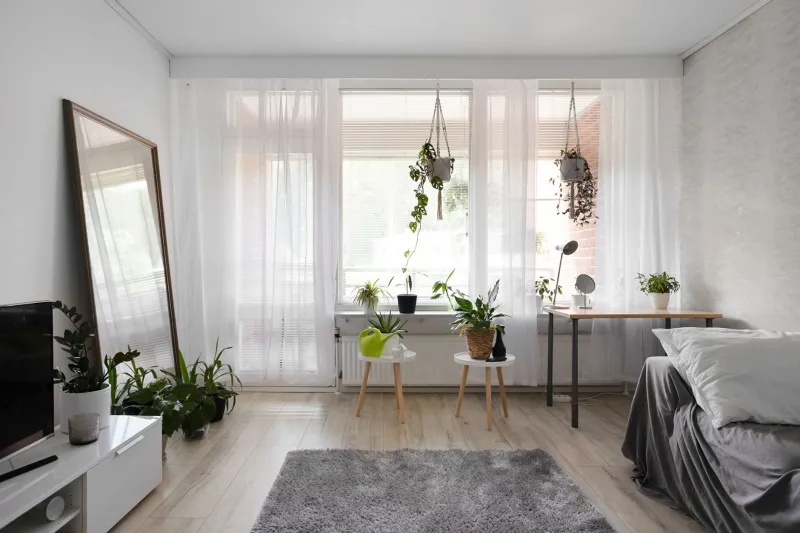
There's a particular kind of afternoon — you know the one. The lamp is on, the blanket is exactly where you left it, your favorite playlist is humming through the room, and everything feels perfectly, wonderfully settled. It's the kind of moment that makes you exhale all the way down to your toes.
And then, somehow, two hours disappear.
Not in a restorative, nap-well kind of way. More like a low-grade drift where you meant to sketch out that business idea, start the online course, or even just write a few emails — and instead you just... stayed. Comfortable. Untouched. Unmoved.
Here's the thing nobody really talks about in home decor circles: the same design choices that make a room feel like a warm hug can also make it feel like a very pleasant trap.
The Science Behind Why Cozy Spaces Can Slow Us Down
Psychologists have long studied the relationship between environment and behavior. What they've found is both reassuring and a little uncomfortable: our surroundings shape our expectations of ourselves. When a space signals "rest mode" — through dim lighting, soft textures, enclosed layouts, and familiar objects — our nervous system actually responds. Cortisol drops. Heart rate slows. The brain shifts into a more passive, receptive state.
That's not a bad thing. Rest is genuinely important, and the comfort culture movement has done a lot of good in reminding Americans that their homes should feel like sanctuaries, not just storage for their stuff.
But here's the paradox: when every corner of your home sends the same signal — when there's no space that quietly asks something of you — you lose the environmental cues that spark curiosity, focus, or forward momentum. Comfort, taken to its logical extreme, can become a kind of ambient sedation.
Your Space Is Always Talking — Are You Listening?
Think about the last time you sat down in a coffee shop to work on something creative or challenging. Chances are, even if the music was loud and the chairs weren't exactly plush, something clicked. You got into it faster. Ideas came a little more freely.
That's not a coincidence. Coffee shops — and similar "third places" — are designed with a subtle amount of stimulation. There's movement at the edges of your vision. The lighting is brighter. The seating is purposeful rather than fully indulgent. Your brain reads all of that as engagement mode, not rest mode.
Now compare that to your favorite corner of your home. If it's been optimized for maximum softness, maximum warmth, maximum familiarity — it might actually be working against you when you're trying to think, create, or push through something hard.
The Difference Between a Sanctuary and a Cocoon
A sanctuary restores you so you can go back out into the world. A cocoon keeps you in.
Both feel good in the moment. But only one of them is actually serving your bigger life.
The goal isn't to strip your home of everything cozy — that would be missing the point entirely. The goal is to build spaces that hold both energies: the warmth and safety that make you feel at home, and just enough friction or inspiration to keep you from flatlining creatively.
Designers sometimes call this "productive discomfort" — not the kind that stresses you out, but the kind that keeps your mind slightly alert and engaged. A chair that's comfortable but not quite recliner-level. A desk near a window with actual daylight. A wall with something on it that makes you think rather than just feel.
Small Shifts That Can Change How Your Space Moves You
You don't need to gut your favorite room to break this pattern. A few intentional changes can shift the energy considerably.
Bring in something unfinished. A half-read book left open on the table. A sketchbook propped up and visible. A project in progress sitting out where you can see it. Incomplete things create gentle psychological tension — they invite you back.
Play with your lighting zones. Keep your soft lamp for evenings and wind-down time, but add a brighter, cooler light source to your workspace or reading chair. Bright, slightly cooler light has been shown to increase alertness and focus without making a room feel clinical.
Rotate what's on your walls. Familiar environments are easy to tune out. Swapping in a new print, a photo that means something to you, or even a piece of art that makes you feel slightly uncertain can re-engage your visual attention and spark new thoughts.
Separate your rest zones from your work zones — even in a small space. If you live in an apartment or a smaller home, this matters even more. Train your brain by being deliberate: this chair is for reading and rest, that table is for thinking and doing. The distinction doesn't have to be dramatic to be real.
Let a little wildness in. A plant that's growing in an unexpected direction. A stack of books you haven't read yet. A texture that's slightly rougher or more interesting than your usual soft picks. Novelty, even in small doses, wakes up the parts of your brain that comfort tends to quiet.
Cozy Doesn't Have to Mean Static
The best version of a cozy home isn't one that asks nothing of you. It's one that makes you feel safe enough to try things — to think out loud, to start something new, to take up space in your own life without apology.
There's a reason the word "home" carries so much weight. At its best, home isn't just where you collapse at the end of the day. It's where you gather yourself back together. Where you figure out who you're becoming.
That kind of home isn't built purely from softness and stillness. It's built from a mix of warmth and intention — spaces that hold you gently while still leaving room for you to grow into something more.
So the next time you're sinking into your coziest corner and feeling that pull to just... stay forever — take a beat. Ask yourself whether the room is restoring you or replacing the life you meant to be living.
Sometimes the coziest thing you can do is build a space that loves you enough to nudge you forward.