When Home Gets Too Good: The Surprising Way Ultra-Cozy Spaces Can Quietly Stall Your Growth
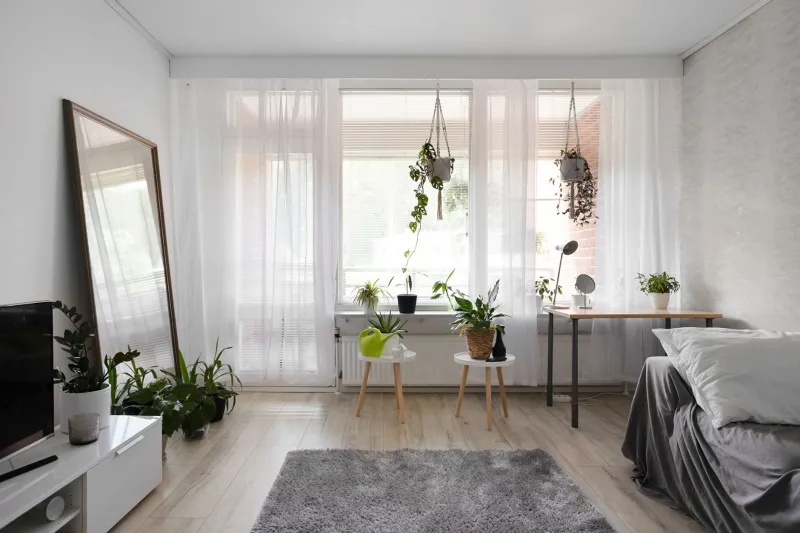
There's a specific kind of Sunday afternoon that a lot of us know well. The candle is lit, the throw blanket is doing exactly what throw blankets are supposed to do, the playlist is soft and unhurried, and the couch has somehow molded itself to your exact shape. Everything feels right. And then Monday comes, and you realize you didn't touch the side project, didn't respond to that one important email, didn't make any progress on the thing you keep telling yourself you're going to start.
You were too comfortable to move. Literally.
Here at Cozy Cotg, we are deeply pro-comfort. Creating a home that feels warm, welcoming, and restorative is genuinely good for you — the research backs it up, and so does common sense. But there's a conversation worth having about the line between a space that recharges you and one that quietly absorbs your ambitions. Because that line is blurrier than most of us want to admit.
The Psychology of the Perfect Cocoon
When your environment feels safe, warm, and predictable, your nervous system settles. Stress hormones drop. Your body reads the room — literally — and shifts into a lower gear. This is exactly what we want from a home after a long day. Restoration is not a luxury; it's a biological need.
The problem shows up when that downshift becomes the default setting, not just the evening wind-down. Psychologists sometimes call this behavioral sink — the phenomenon where an environment becomes so optimized for comfort and ease that it removes the low-level friction that actually drives us to do things. When everything around you signals "rest," it becomes genuinely harder to activate the part of your brain that generates motivation, creativity, and follow-through.
Think about it this way: there's a reason coffee shops and libraries have always been popular places to get work done, even for people who have perfectly good homes. The ambient buzz, the slightly uncomfortable chair, the mild social pressure of being seen — these are forms of gentle friction, and friction, in small doses, is a productivity tool.
Your perfectly curated cozy corner might be working against that mechanism.
It's Not About Giving Up the Comfort
Before you start eyeing your candle collection with suspicion — don't. The goal here isn't to make your home less cozy. It's to get smarter about where and when you deploy the full comfort arsenal.
One of the more useful frameworks to borrow from interior design is the idea of zoning with intention. Most of us already do this loosely — we sleep in the bedroom, cook in the kitchen — but we rarely think about designing zones that are deliberately calibrated for different mental states.
Your living room can absolutely be the place where you decompress at the end of the day. But if it's also where you're trying to sketch out your business plan or study for a certification, you're asking one room to hold two completely opposite psychological cues at the same time. Spoiler: the cozy cues usually win.
Small Shifts That Create Big Differences
You don't need a home office with a standing desk and harsh fluorescent lighting to break the comfort trap. A few deliberate tweaks can shift the energy of a space without stripping it of its warmth.
Change the light. Soft, warm, dim lighting is your brain's cue to wind down. If you're trying to get something done, bump up the brightness or pull back the curtains. Even a cooler-toned lamp at a desk can signal a shift in mode without turning your space into an interrogation room.
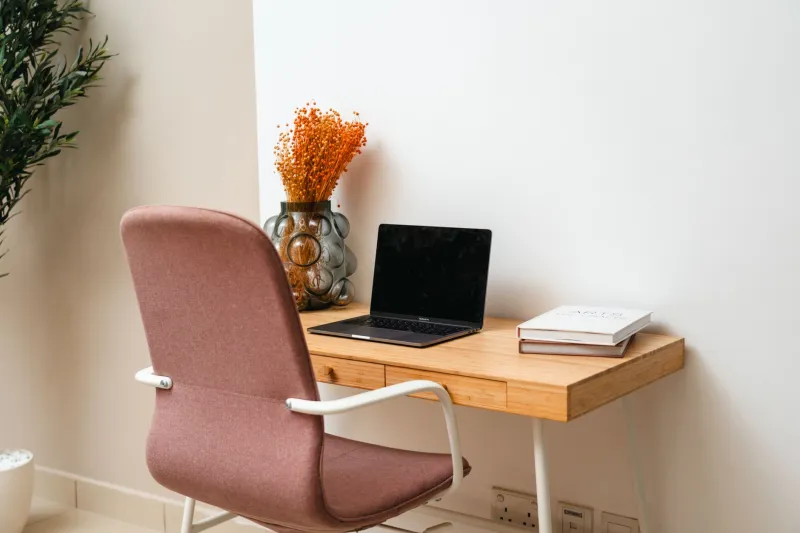
Rethink your seating posture. There's a reason you don't see many productivity guides recommending that you work from a cloud-soft sectional with your legs up. Upright seating — even just a chair at a table — keeps your body in a slightly more alert state. Save the deep-sink couch moments for when you've actually earned them.
Create a visual on/off switch. Some people use a specific mug only when they're in work mode. Others clear a desk surface completely before sitting down to focus. These small rituals signal to your brain that the context has changed. It sounds almost too simple, but environmental cues are powerful — they're the same reason making your bed in the morning can shift your entire mental posture for the day.
Let one corner be a little uncomfortable. This doesn't mean spartan or cold. It just means resisting the urge to add the fourth pillow, the heated blanket, and the aromatherapy diffuser to the spot where you're trying to think clearly. A little less everything can go a long way.
The Guilt Piece — Let's Address It
Something that doesn't get talked about enough: a lot of people feel genuine guilt when they realize their cozy home has become a form of avoidance. If that's landing for you, take a breath. It's not a character flaw. It's a design problem with a design solution.
We build comfort into our homes because the outside world can be relentless and exhausting. The instinct to create a soft landing is healthy and worth protecting. The work is simply in making sure that landing pad doesn't become the only place you ever want to be.
There's a difference between choosing rest — intentionally, as a form of self-care — and defaulting to rest because the environment makes everything else feel too hard. The first one fills you up. The second one tends to leave you feeling vaguely stuck, even when you're surrounded by things that should make you happy.
Designing a Home That Holds Both
The homes that seem to work best for people over the long run aren't the ones that are maximally cozy in every corner. They're the ones that have range — spaces that can hold a quiet Saturday morning with coffee and a novel and a focused Tuesday evening where something actually gets built, written, or figured out.
That range doesn't require a bigger house or a renovation budget. It requires a little intentionality about what each space is for, and the willingness to resist turning every surface into a nest.
Cozy is still the goal here. Cozy Cotg is not pivoting to minimalist productivity content, we promise. But the coziest life — the one that actually feels full and satisfying — probably has a little more texture to it than an afternoon that never ends.
And sometimes, the most nurturing thing your home can do for you is make it just slightly easier to get up and go do the thing.